One Platform for Every Function
Run every business function on a unified platform with shared capabilities, consistent experiences and a common operating model.
Entroid unifies organisations, knowledge and systems through governed AI, thereby enabling autonomous operations. It empowers enterprises to align strategy with execution, accelerate innovation, and modernise applications while maintaining compliance, governance, and control.

SOC 2 Type II-aligned · ISO 27001 · GDPR
Security and data protection frameworks
10+ Enterprises in production
Air-gapped, on-prem and cloud deployments
Trusted intelligence. Full accountability
Every decision is explainable and traceable
Innovation & Modernisation
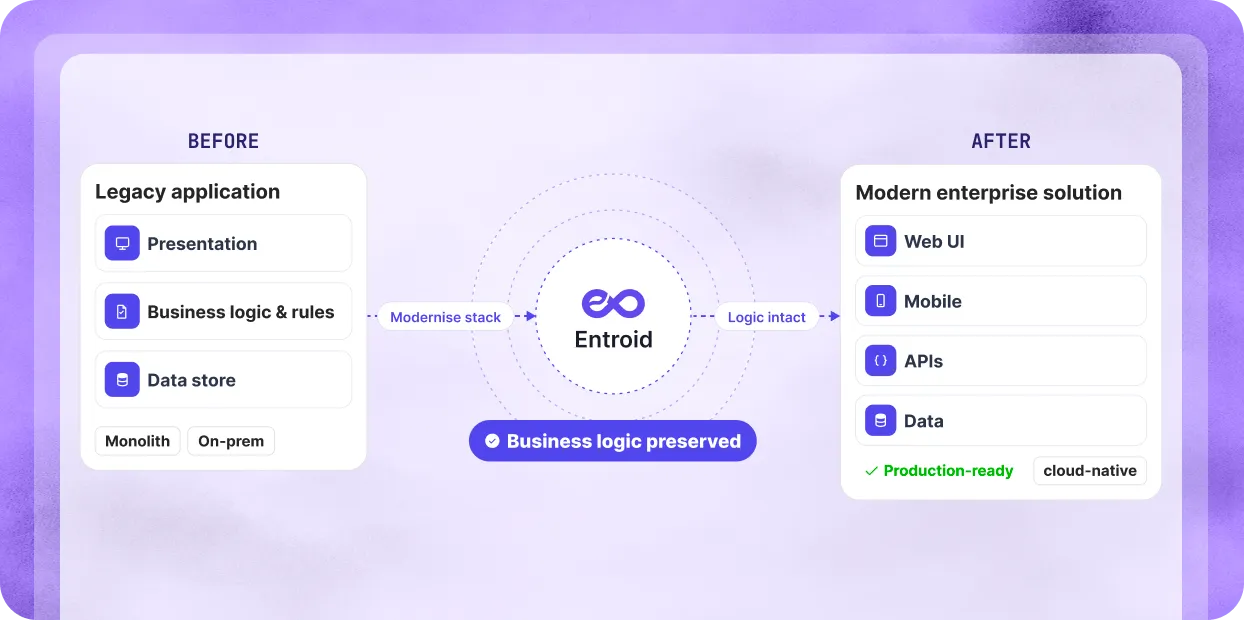
Entroid enables organisations to innovate faster and modernise legacy systems on a single enterprise platform. Build production-ready solutions or transform existing applications while preserving business logic, accelerating delivery, and reducing the complexity, cost and risk of enterprise transformation.
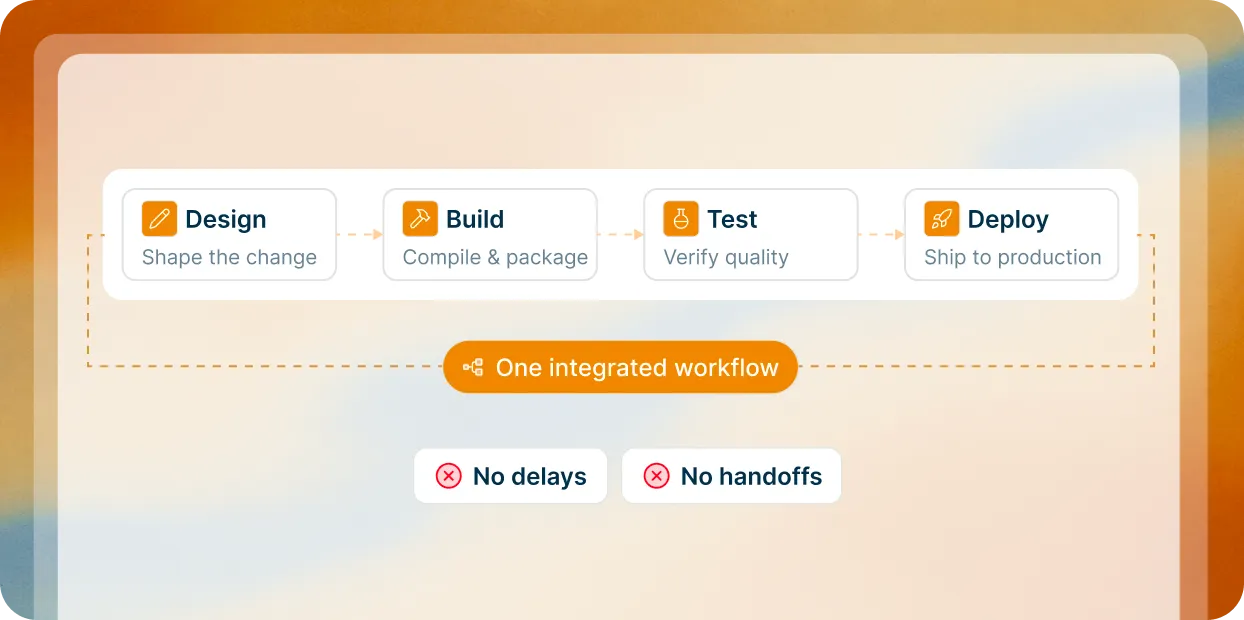
Turn business requirements into production-ready enterprise solutions through a single, continuous delivery process.
Design, build, test and deploy through one integrated workflow, eliminating delays and unnecessary handoffs.
Transform legacy applications onto a modern technology stack while preserving business rules, processes and enterprise knowledge.
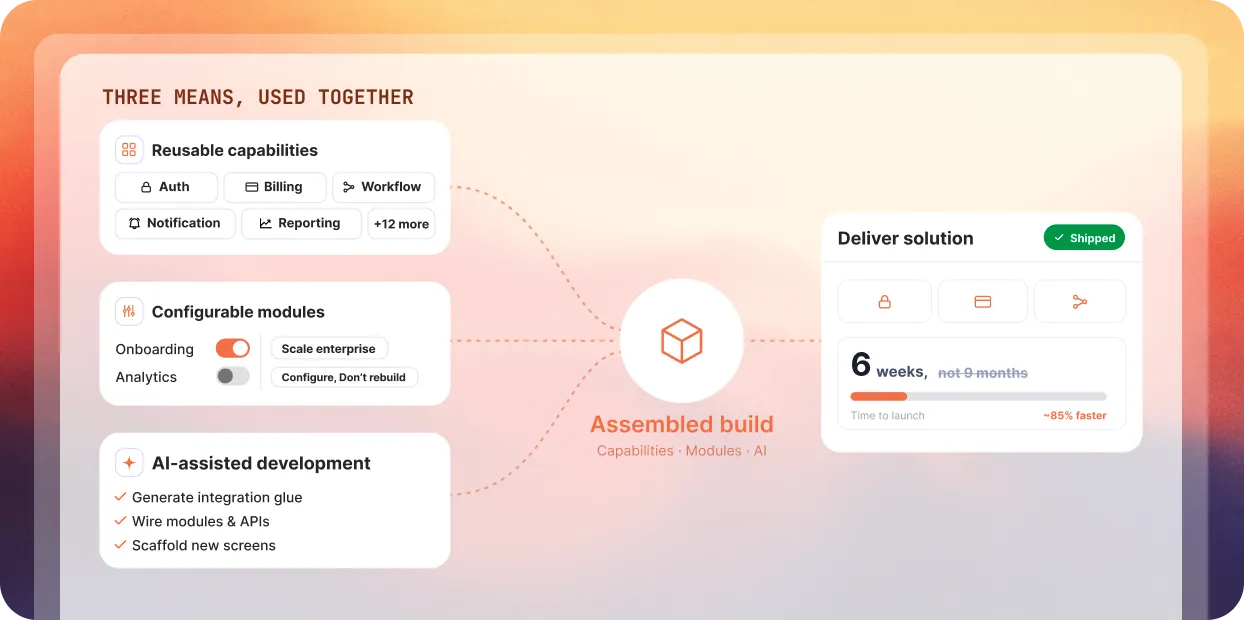
Accelerate implementation using reusable enterprise capabilities, configurable modules and AI-assisted development.
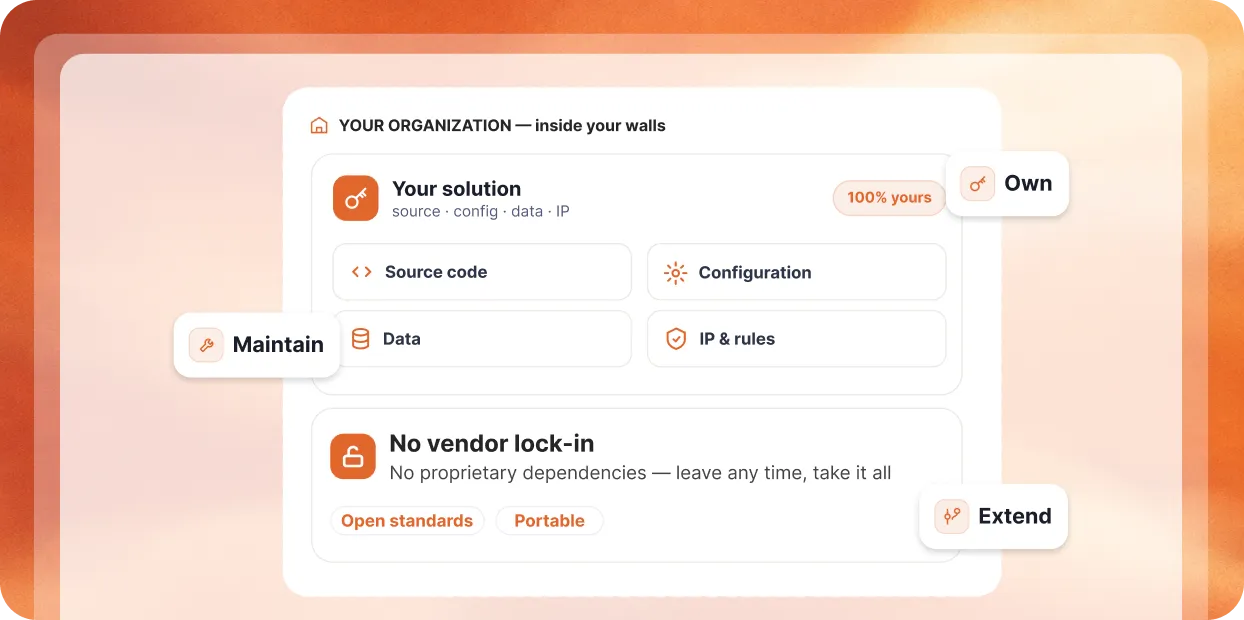
Own, maintain and extend your solutions independently without vendor lock-in or proprietary dependencies.
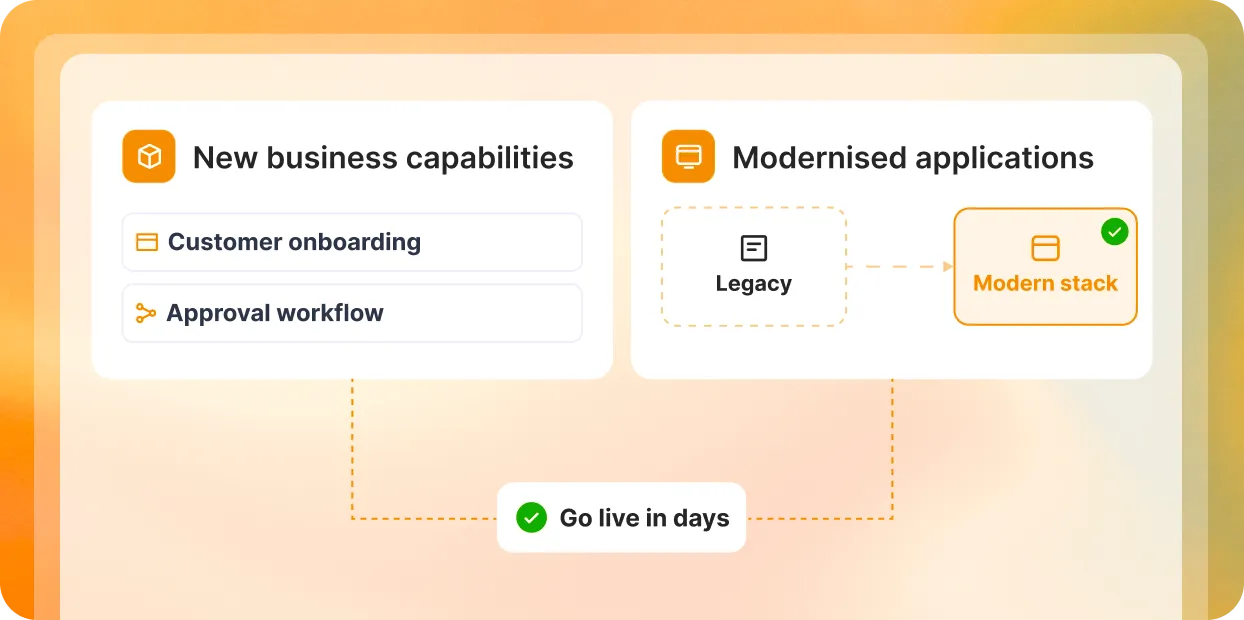
Deliver new business capabilities and modernised applications in days instead of months.

Unified Enterprise Platform
Entroid unifies business applications, enterprise knowledge, data and AI on a single operating model. Shared enterprise capabilities are built once and reused everywhere, enabling every business function to work as one connected enterprise instead of isolated systems.
Run every business function on a unified platform with shared capabilities, consistent experiences and a common operating model.
Identity, workflows, notifications, integrations and automation are built once and reused across the entire enterprise.
Business data, processes and enterprise knowledge are connected into one trusted foundation for every application and AI agent.
Business functions collaborate through shared processes and real-time information instead of disconnected systems.
Applications, data and external systems connect through a unified platform without complex point-to-point integrations.
Common standards, reusable services and shared governance deliver consistent operations across the entire enterprise.
Strategy & Execution
Entroid connects strategy, portfolios, programmes, projects and operations on a single operating model. Every investment, initiative and business activity remains aligned with strategic objectives, while real-time performance and AI-driven insights continuously guide execution and decision-making.
Enterprise AI
Entroid embeds AI into every business function through a governed enterprise AI platform. Built on enterprise context, knowledge and data, AI agents understand your organisation, collaborate across workflows, automate complex work and continuously improve decisions while remaining secure, explainable and under enterprise control.
Purpose-built AI agents understand enterprise context, reason across business processes and execute work with human oversight.
Interact with enterprise knowledge, applications and workflows using natural language across every business function.
Automate repetitive and complex business processes through AI-driven workflows and intelligent orchestration.
Multiple specialised AI agents collaborate, coordinate decisions and complete end-to-end enterprise processes.
Forecast business outcomes, detect risks and uncover opportunities using enterprise-wide data and AI models.
Deploy AI securely with enterprise governance, explainability, permissions and complete operational control.

Governance, Security & Scale
Entroid is engineered for enterprise trust. Governance, security and compliance are embedded into every application, workflow and AI interaction, while a resilient cloud-native architecture ensures the performance, scalability and operational continuity that mission-critical organisations depend on.
Policies, approvals and delegated authority are enforced consistently across applications, workflows and AI.
Protect enterprise data, users and AI interactions through built-in security, identity and access controls.
Support regulatory obligations with configurable controls, evidence collection and compliance monitoring.
Every decision, workflow and AI action is fully traceable with comprehensive audit history and operational transparency.
Cloud-native architecture designed for high availability, fault tolerance and continuous business operations.
Confidently support millions of transactions, thousands of users and global enterprise workloads.

Ownership & Independence
Entroid gives organisations complete ownership of their enterprise solutions, intellectual property and future roadmap. Build, extend and evolve applications on an open, enterprise-grade platform without vendor lock-in, while retaining the freedom to innovate, customise and grow on your own terms.
Own your applications, configurations, data models and enterprise solutions without dependency on proprietary platforms.
Open standards and portable architecture give your organisation the flexibility to evolve independently.
Your business logic, enterprise knowledge and intellectual property remain fully owned and controlled by your organisation.
Build, customise and extend enterprise capabilities without platform restrictions or closed ecosystems.
Empower internal teams and partners to develop, enhance and maintain enterprise solutions independently.
Adopt new technologies, AI capabilities and business innovations without rebuilding or replacing your enterprise foundation.

Enterprise Flexibility
Every enterprise is different. Entroid adapts to your operating model, business processes and technology landscape instead of forcing standardisation. Configure, extend and evolve the platform at your own pace while preserving the ways of working that make your organisation unique.
Adapt applications, workflows and business rules without custom development or platform limitations.
Add new capabilities, AI agents and business services as your organisation evolves without disrupting existing operations.
Deploy across cloud, on-premises or hybrid environments while maintaining one consistent enterprise platform.
Support existing business processes and operating models instead of forcing organisations to adopt predefined processes.
Integrate seamlessly with existing enterprise applications, data and external systems without replacing them.
Roll out capabilities incrementally across business units, departments or regions with minimal operational disruption.

Enterprise Deployment
Entroid transforms enterprise delivery into a continuous, automated process. From business idea to production, built-in automation, reusable enterprise capabilities and AI-assisted delivery reduce implementation time, lower operational costs and accelerate business innovation, while maintaining enterprise-grade governance, security and operational readiness.

Reusable enterprise capabilities, automation and AI-assisted delivery accelerate the journey from business requirements to production.
Consolidate technologies, integrations and operational processes on a unified enterprise platform to reduce long-term operating costs.
Reduce engineering effort through automation, allowing teams to focus on delivering new business value instead of repetitive implementation work.
Built-in governance, traceability and automated evidence collection significantly reduce manual audit preparation and compliance activities.
Illustrative outcomes based on customer implementations and typical enterprise transformation programmes. Actual results may vary depending on implementation scope, organisation size and operational maturity.
The Enterprise Journey
One continuous journey of enterprise evolution, governed end to end.

